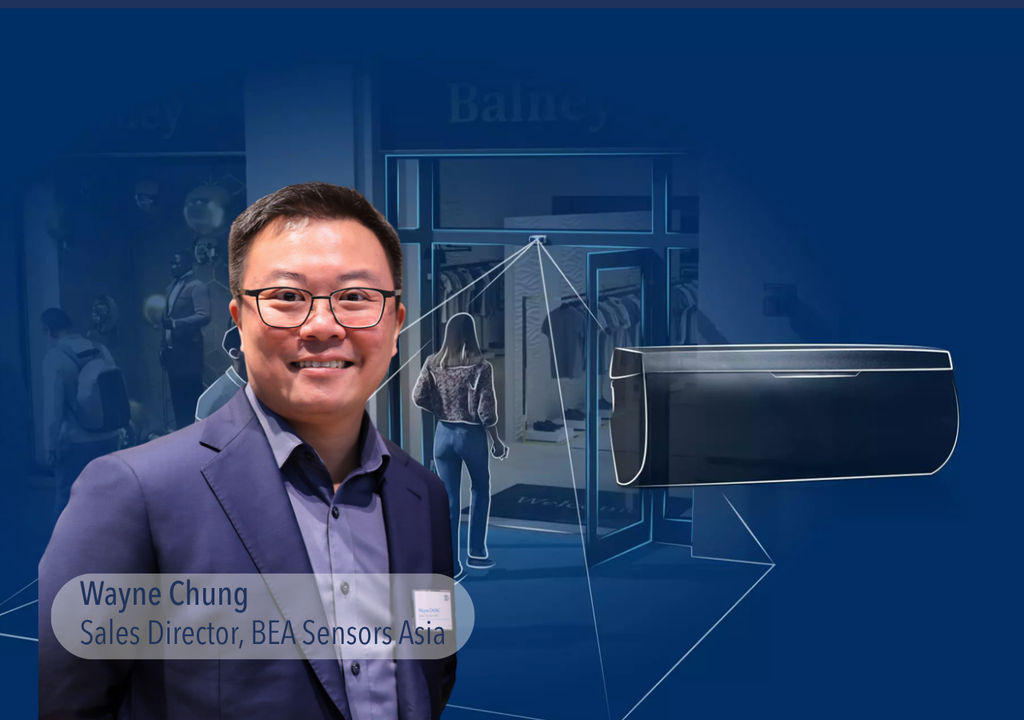
Having worked across Asia for years, from Hong Kong’s high‑density transit corridors to Dubai’s smart office towers and Mumbai’s new airport terminals, I’ve witnessed a recurring frustration. Building owners spend heavily on intelligent access control, biometric turnstiles, and cloud-managed campus gates, yet the primary door sensor often remains a dumb, motion‑only device. It triggers for anything that moves: a passing shopping cart, swirling leaves, a pedestrian walking parallel to the entrance.
False openings waste energy, accelerate mechanical wear, and annoy legitimate users by “door dancing”. More importantly, they undermine trust in automation. If a door opens for no reason too often, people stop believing it will work when it should.
Motion Detection is No Longer acceptable, intelligence is needed at the point of entry.
Three Trends That Define Our Market Today
1. From “motion” to “direction & speed & intention”
2. Cross‑traffic filtering is non‑negotiable
Our cities are dense. A sidewalk in Hong Kong, Bangkok, or Jakarta sees constant pedestrian flow. A door that opens for every passerby is a nuisance. We need sensors that ignore parallel movement and only trigger on purposeful entry. This is not a “nice‑to‑have” feature, it is a deal‑breaker for any serious sensor specifier.
3. Installation must be fast, simple, and mobile‑first
I have visited installation sites across Asia. Too often, I see technicians spending hours with laptops, handheld controllers, or confusing DIP switches—while balancing on ladders. That is not sustainable. Our installers need a sensor that can be configured via a mobile app in minutes. Setting, diagnose remotely. No special tools.
Our Answer: A Smart Opening Sensor Built for the Realities
Let me introduce our new smart opening sensor ELIX, a product that directly addresses these three trends—without compromise.
Feature 1: Direction & speed & intention‑based activation
Thanks to its advanced FMCW technology, ELIX analyses direction, speed, and anticipates user intent to trigger openings only when needed.
- A person walking directly toward the door → immediate open
- A person walking at an angle or parallel → ignore (cross traffic filtering)
- Approach speed variance → Dynamically adjusts opening timing for a natural, uninterrupted flow
Feature 2: Advanced cross traffic filtering
ELIX reduces unnecessary door openings. Configurable detection zones and directional logic mean the door stays closed when it should, yet remains sensitive to genuine users. This is proven in field tests across high‑density footfall environments.
Feature 3: Mobile app installation – no laptop, no ladder frustration
ELIX enables a single-sensor setup with flexible placement on the opening side, allowing one sensor to cover double swing doors, simplifying installation and increasing efficiency.
Our companion app (iOS/Android) guides the installer step by step, one technician can complete a full installation and calibration in a short time.
- Mount sensor
- Connect via Bluetooth
- Draw detection zones visually
- Set direction sensitivity and hold‑open time
- Real‑time visual feedback of what the sensor “sees”
Why This Matters for Your Business
I look at three numbers: energy savings, maintenance cost reduction, and installer productivity.
- Fewer false openings → direct electricity savings; reduce energy consumption and lower carbon footprint.
- Less unnecessary door cycling → longer mechanical life, lower spare parts cost
- App‑based installation → ELIX significantly cuts on-site working hours. A single ELIX replaces two traditional opening sensors for double-swing doors and eliminates tedious fine-tuning for swing door airlocks, enabling faster, more efficient installation.
For building owners, it means lower energy bills (fewer false openings), reduced maintenance (less unnecessary door cycling), and a better user experience. For installers, it means faster, safer, and more profitable deployments.
The future of automatic doors is intelligent. And that intelligence starts with the sensor.