
In automatic door systems, sensors act as the “intelligent eyes” of the door, determining how quickly it responds, how safely it operates, and how smooth the user experience feels. Different sensor technologies are designed for different scenarios — from contactless activation in public spaces to high-level safety protection in hospitals, senior care centers and residential buildings.
Activation Sensor Technologies
Microwave Sensor Technology
-
 Microwave for Automatic Sliding Doors
 -
 Microwave for Automatic Swing Doors
 -
 Microwave for Automatic Revolving Doors
Microwave sensors emit low-power microwaves and detect motion by analyzing changes in the reflected waves. When movement is detected within the automatic door area, the system triggers the door to open or close. Some microwave sensors can also distinguish between movement toward and away from the door, enabling functions such as unidirectional activation. Because of their high reliability and strong adaptability to different environments, microwave sensors remain the mainstream choice for automatic doors in public spaces such as shopping malls, office buildings and airports.
Contactless Switch Technology
-
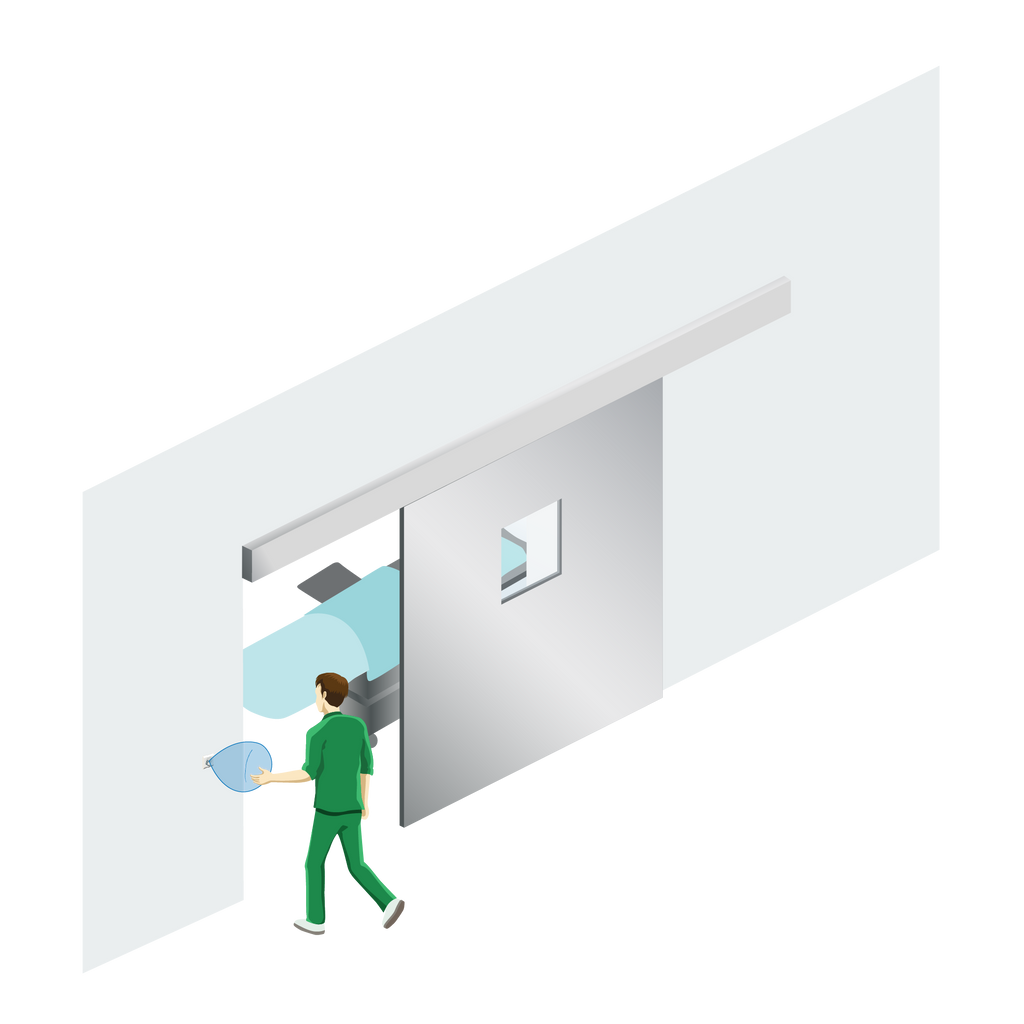 Contactless Switch for Automatic Sliding Doors
 -
 Contactless Switch for Automatic Industrial Doors
Contactless switches allow users to activate automatic doors without physical contact. By detecting gestures such as a hand wave, the door can be opened while avoiding direct contact with surfaces, helping to reduce the risk of cross-contamination. This makes contactless switches particularly suitable for hygiene-sensitive environments such as hospitals, laboratories and food processing facilities, as well as locations like senior care centers where convenient and easy passage is important.
Activation Sensor Technology Comparison
| Technology Type | Working Principle | Core Advantages | Main Limitations | Best Application Scenarios |
|---|---|---|---|---|
|
Microwave Technology |
Emits microwaves and detects movement based on changes in the reflected waves. |
|
High-traffic public areas such as shopping malls, office buildings, and airports. |
|
|
Contactless Switch Technology |
Uses microwaves or similar signals to enable contactless activation. |
|
Requires intentional user action (e.g., waving). |
Hospitals, senior care centers, and food processing facilities. |
Safety Sensor Technologies
Laser Technology
-
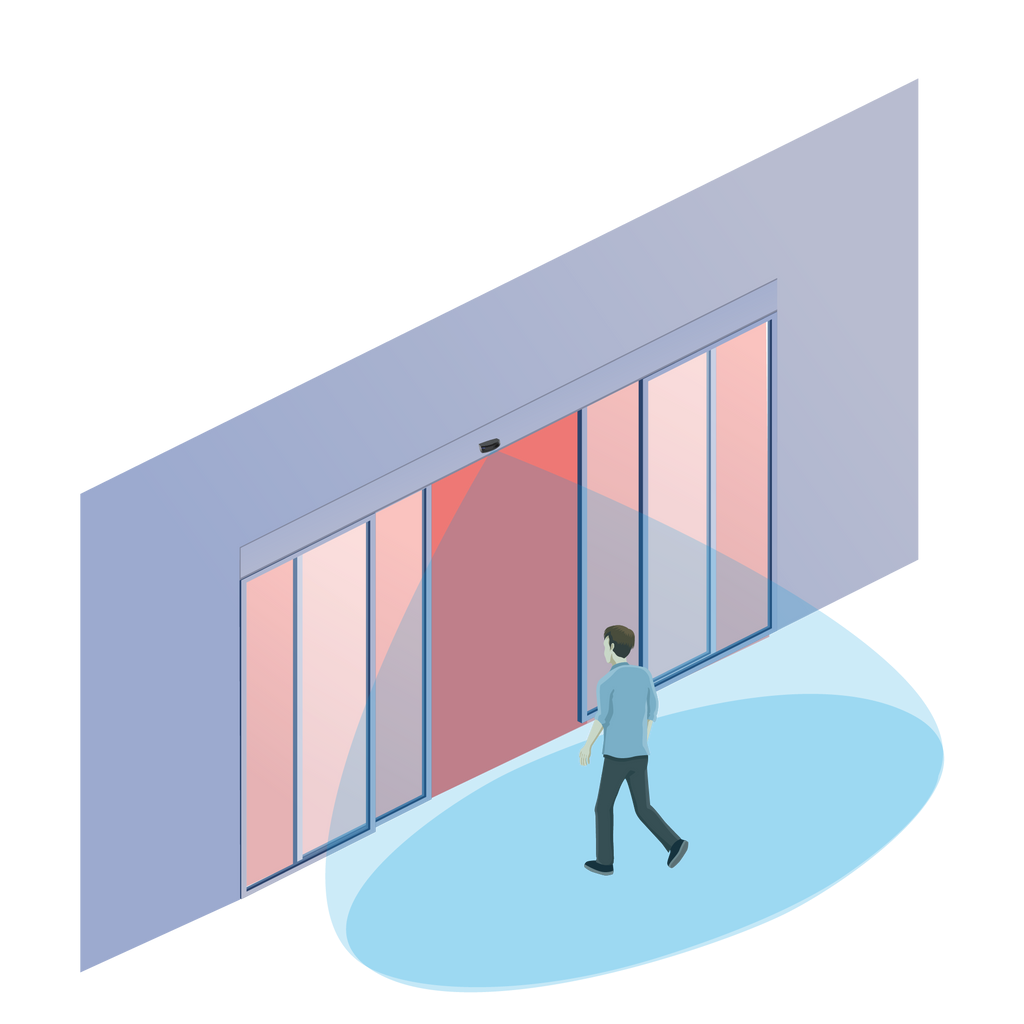 Laser for Automatic Sliding Doors
 -
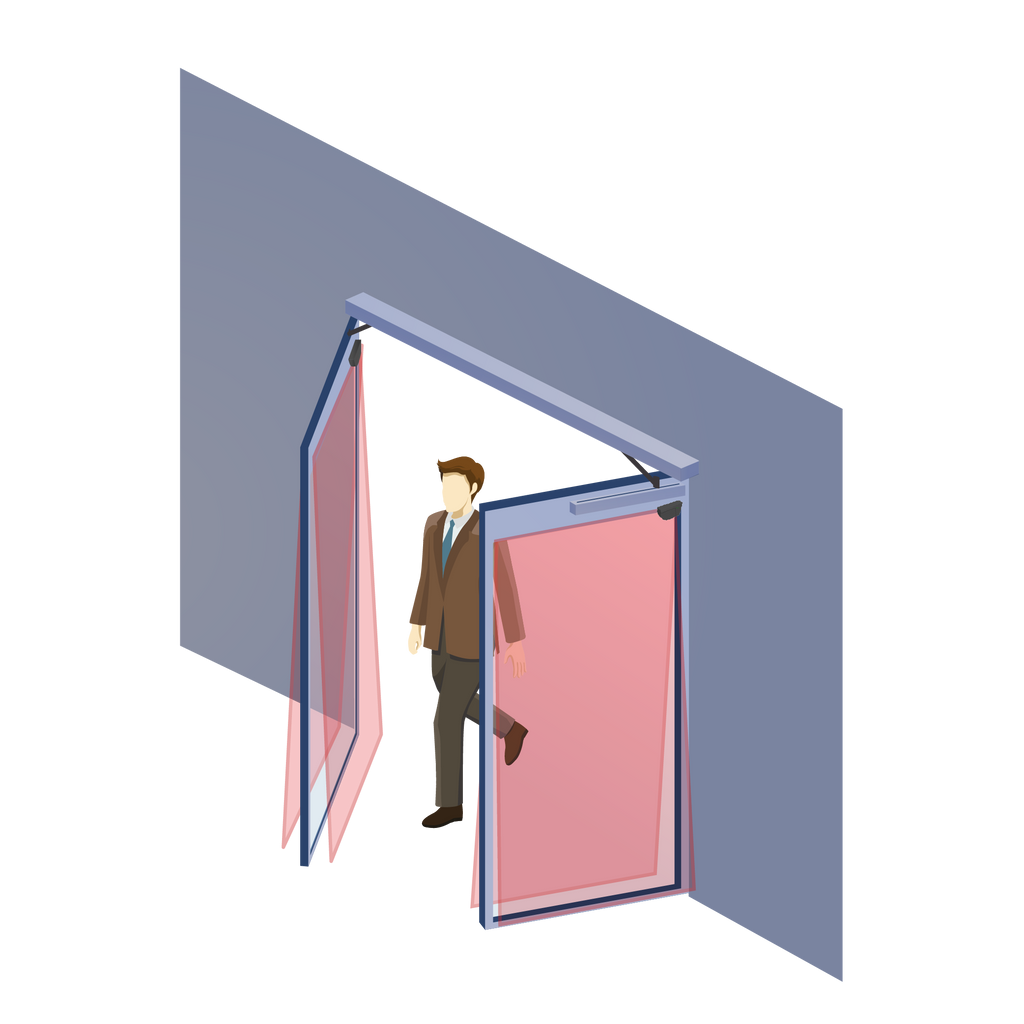 Laser for Automatic Swing Doors
 -
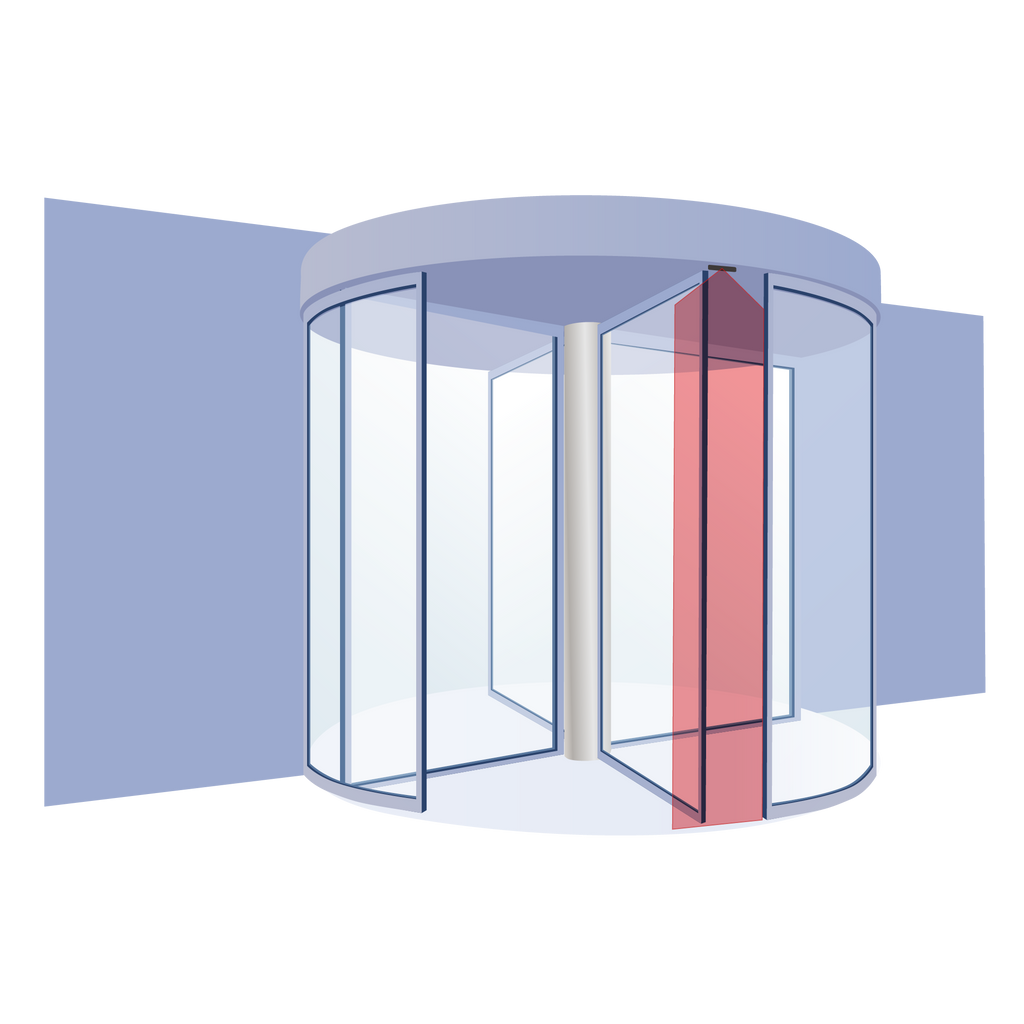 Laser for Automatic Revolving Doors
Laser technology uses rotating laser beams to create a two-dimensional or three-dimensional detection field around the automatic door, providing highly precise and wide-area safety protection. For extra-wide entrances or special door types, laser scanning technology is particularly suitable due to its high precision and long detection range. The video below further demonstrates the performance differences between laser and infrared technologies.
Infrared Technology
-
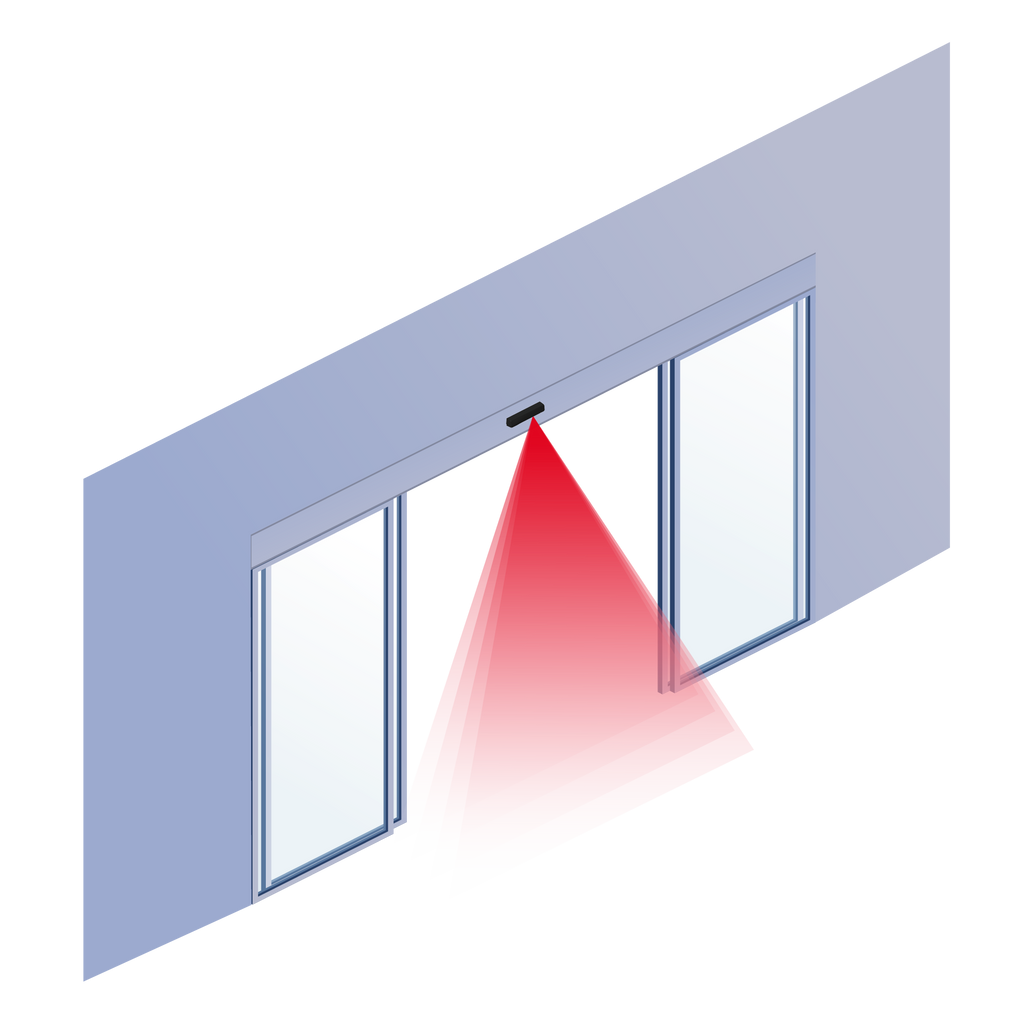 Infrared Sensor on Sliding Door
 -
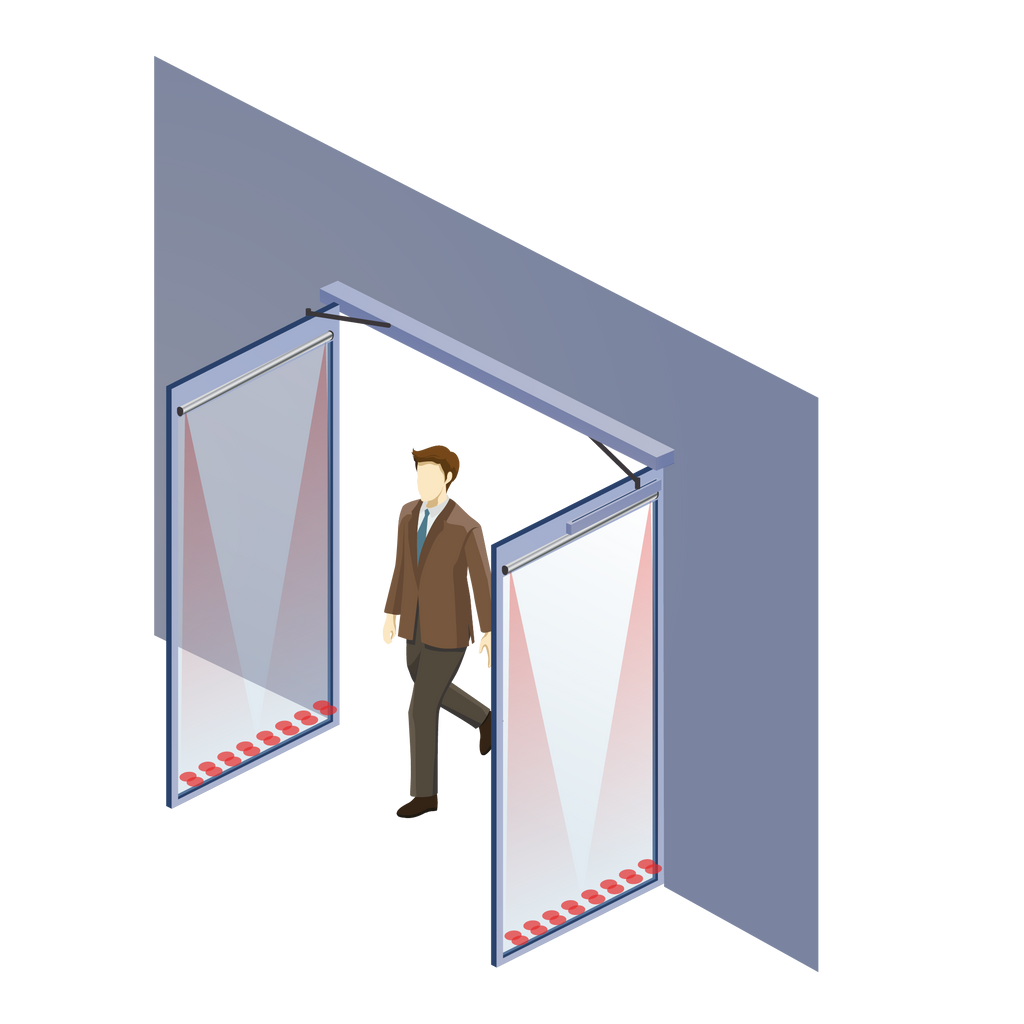 Infrared Sensors on Swing Doors
 -
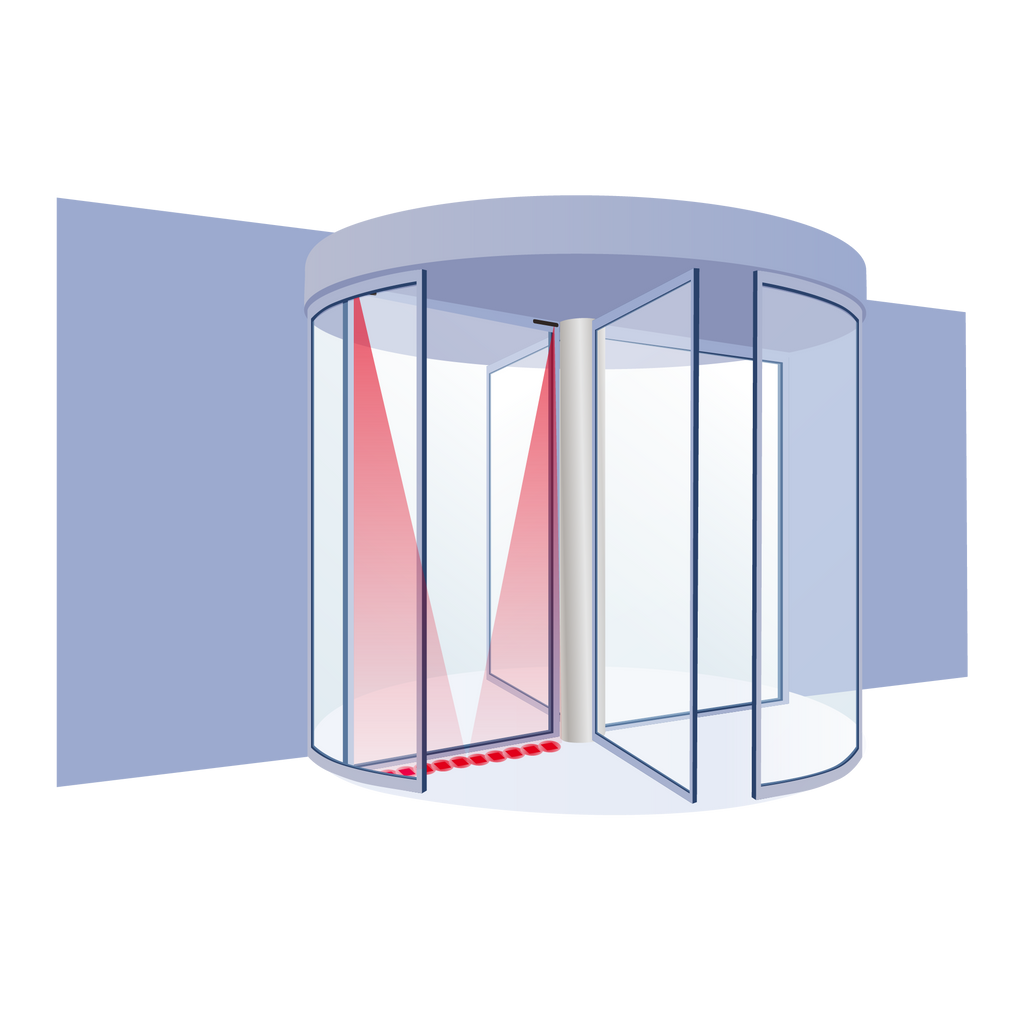 Infrared Sensors on Revolving Door
Infrared technology creates dense infrared curtains across the doorway. When a person or object interrupts the light curtain, the safety mechanism is triggered to prevent the door from closing. Infrared systems are easy to install, offer strong resistance to interference and provide reliable protection for many door types. They are especially suitable for modern frameless glass doors, as well as sliding, swing and revolving doors.
The video below compares photo beam and infrared technologies, highlighting the advantages of infrared technology in terms of detection coverage and reliability.
Photo Beam Technology
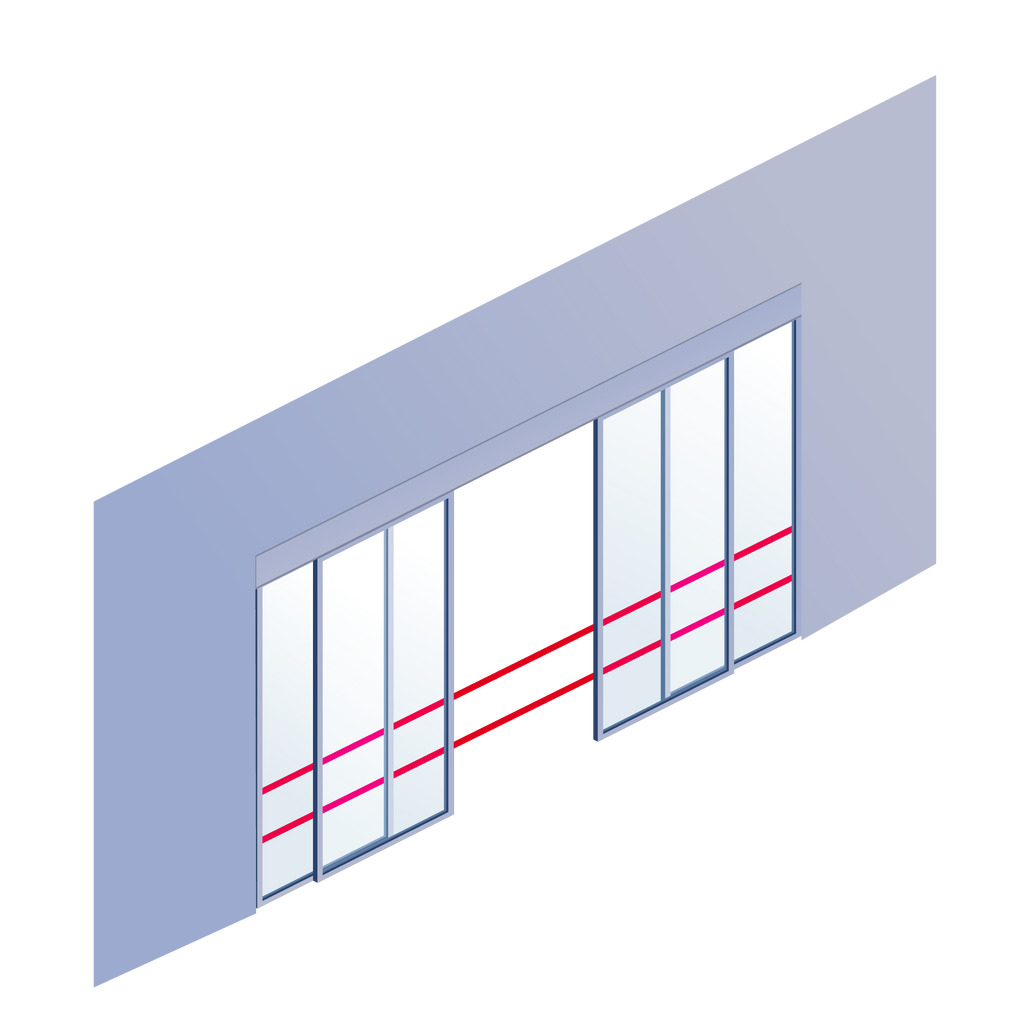
Photo beam systems use infrared emitters and receivers installed on opposite sides of the doorway to create one or multiple infrared beams. When an object interrupts the beam, the door will stop or reverse to ensure safety. However, traditional photo beam systems have several limitations, including limited protection range, more complex installation, and sensitivity to strong light interference. Installation can also be challenging on frameless glass doors, and performance may be affected by reflective surfaces such as stainless steel or glass. As a result, photo beam technology today is typically used in applications with lower safety requirements.
Safety Sensor Technology Comparison
| Technology Type | Working Principle | Core Advantages | Main Limitations | Best Application Scenarios |
|---|---|---|---|---|
|
Laser Technology |
The rotating laser beam creates a detection area for comprehensive safety protection. |
|
|
Hospitals, senior care centers, high-end residential entrances, and other high-safety entrances/exits (sliding, swing and revolving doors). |
|
Infrared Technology |
Forms single or multiple layers of infrared light curtains across the doorway. When an object interrupts the curtain, the safety function is triggered. |
|
|
Sliding and swing door anti-collision protection; Revolving door pinch zone protection; Safety protection for high-end residential entrances/exits. |
|
Photo Beam Technology |
An emitter and receiver on opposite sides of the doorway create infrared beams. When the beam is interrupted, the safety function is triggered. |
|
|
Basic safety configuration for public automatic doors; Suitable for entrances/exits with lower safety requirements. |
How to Select Automatic Door Sensor Technology?
There is no absolute “best” automatic door sensor technology — only the most suitable one for the application!
First, Safety. Automatic doors must be equipped with multiple safety protection mechanisms. Safety sensors are an indispensable “protective guardian.” Their necessity is reflected in:
- Preventing entrapment accidents by monitoring the door area in real-time, ensuring the door immediately stops or reverses when necessary, protecting the safety of pedestrians, especially children, the elderly, or those with limited mobility.
- Compensating for the blind spots of traditional motion sensors, accurately identifying stationary or slow-moving individuals to prevent collisions caused by premature door closure.
- Meeting mandatory legal and regulatory requirements, such as EN16005. Safety sensors transform automatic doors from a mechanical “blind” executor of commands into a safeguard that perceives risks and protects passage.
Second, Suitability. The type of sensor should be selected based on the installation environment and the characteristics of the user population. The European Standard EN16005 categorizes automatic door environments into “high-risk” and “tolerated risk” applications.
High-risk environments — such as hospitals, senior care centers, schools and airports — are frequently used by elderly individuals, children and people with limited mobility. In such situations, higher-level safety sensors, such as laser scanning technology, are often required to ensure reliable protection in both primary and secondary danger zones.
In tolerated-risk environments such as office buildings, infrared-based sensors are generally sufficient to provide the necessary level of safety protection.
Third, Product Reliability and Durability. Automatic door sensors must operate 24/7 for the public and withstand various weather conditions. Therefore, the product’s protection rating (Ingress Protection), anti-interference capability, and other factors are important considerations.
Therefore, selecting an automatic door sensor is not purely a technical decision. It requires a comprehensive evaluation of factors such as safety requirements, application environments, reliability and durability, budgets, and architectural considerations. The best solution is achieved by understanding the real needs of the application and selecting the technology that best matches those requirements.